- English
- Español
- Português
- русский
- Français
- 日本語
- Deutsch
- tiếng Việt
- Italiano
- Nederlands
- ภาษาไทย
- Polski
- 한국어
- Svenska
- magyar
- Malay
- বাংলা ভাষার
- Dansk
- Suomi
- हिन्दी
- Pilipino
- Türkçe
- Gaeilge
- العربية
- Indonesia
- Norsk
- تمل
- český
- ελληνικά
- український
- Javanese
- فارسی
- தமிழ்
- తెలుగు
- नेपाली
- Burmese
- български
- ລາວ
- Latine
- Қазақша
- Euskal
- Azərbaycan
- Slovenský jazyk
- Македонски
- Lietuvos
- Eesti Keel
- Română
- Slovenski
- मराठी
- Srpski језик

What are the prospects for the application of anti-theft meat labels in the meat market?
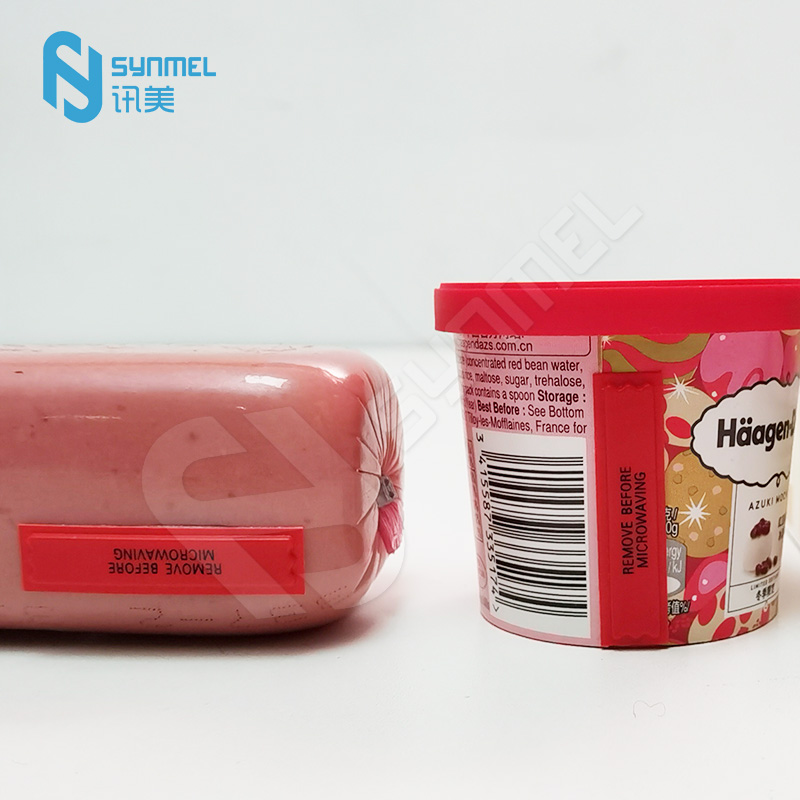
Anti-theft meat labels offer value in loss prevention, traceability, and supply chain management. With the widespread adoption of self-checkout, high meat prices, and increasing food safety requirements, their application prospects are broad. However, challenges remain regarding cost, technological compatibility, and user experience.
I. Core Application Value
Loss Prevention and Cost Reduction: Meat is a high-priced, high-theft-rate product. Tags can reduce store loss rates. Stores with deployed intelligent anti-theft systems have seen an average loss rate reduced to 0.87%, 1.38 percentage points lower than those without, directly increasing gross profit margin by approximately 0.9%-1.2%.
Traceability and Compliance: RFID, QR code, and other tags can be linked to data across the entire supply chain, from breeding and quarantine to slaughtering and distribution, achieving "one code per piece of meat." This satisfies regulatory and consumer rights to know, and facilitates recalls and liability determination.
Supply Chain Optimization: Tags integrate temperature and humidity sensors to monitor the cold chain environment in real time, reducing spoilage and losses; they also support rapid inventory checks and inventory alerts, improving turnover efficiency.
Upgraded Consumer Experience: In self-checkout scenarios, tags, combined with access control systems, not only ensure product security but also improve checkout efficiency, reducing manual verification and queuing.
II. Current Application Status
Diverse Technology Approaches: EAS acousto-magnetic/radio frequency tags are used for store anti-theft, offering low cost and easy deployment; RFID tags support single-item tracking and data reading/writing, suitable for high-end meat products and end-to-end management; NFC tags are suitable for close-range interaction, facilitating consumers' access to traceability information.
Uneven Scenarios Penetration: Large-scale application is already implemented in European and American supermarkets (such as Albert Heijn in the Netherlands); domestic chain supermarkets and premium meat shops are gradually piloting the technology, while farmers' markets and small stores have lower penetration rates due to cost and management difficulties.
Continuously Decreasing Costs: The cost of pig ear tags has dropped from three or four yuan to less than one yuan, and the price of RFID tags is decreasing year by year, creating conditions for large-scale application.
III. Key Challenges and Countermeasures
Cost and Adaptability: Tag cost and cold chain environment (low temperature, high humidity, grease) affect performance. Countermeasures: Promote large-scale production and develop specialized labels that are waterproof, low-temperature resistant, and easy to peel off; adopt a "hardware + service" model to reduce one-time investment.
User Experience and Management: Labels affect the appearance of goods, increasing manual labeling and recycling processes. Countermeasures: Develop invisible labels and biodegradable material labels; implement automated labeling equipment and rapid demagnetization/decoding systems for cash registers.
Data Security and Standards: Traceability data is at risk of leakage and tampering, and data interoperability between systems is difficult. Countermeasures: Blockchain-based evidence storage ensures data immutability; promote industry standardization to achieve cross-platform data sharing.
IV. Future Prospect Forecast
Market Size Growth: In 2024, the usage of RFID tags in Chinese supermarkets and department stores reached 8.9 billion, a year-on-year increase of 19.2%, with meat tags becoming a significant growth driver.
Technological Integration and Upgrade: Tags integrate AI vision, sensors, and IoT technologies to achieve abnormal behavior warnings, automatic alarms, and intelligent scheduling, becoming a key node in smart retail.
Application Scenarios Expansion: Extending from chain supermarkets to community group-buying pickup points, fresh food e-commerce pre-positioning warehouses, and farmers' markets, covering the entire meat distribution scenario.
Policy-Driven Acceleration: Improved food safety and traceability regulations will drive the application of labels from the high-end market to all product categories.
V. Conclusions and Recommendations
The application prospects of anti-theft meat labels are optimistic. In the short term, pilot programs can be prioritized in high-end meat products and chain supermarkets, with long-term expansion to all product categories and scenarios. Enterprises should select suitable technical solutions based on their own scale and needs, balancing costs and benefits to create an integrated system of "loss prevention + traceability + supply chain management".
Previous:Working principle of optical tags