- English
- Español
- Português
- русский
- Français
- 日本語
- Deutsch
- tiếng Việt
- Italiano
- Nederlands
- ภาษาไทย
- Polski
- 한국어
- Svenska
- magyar
- Malay
- বাংলা ভাষার
- Dansk
- Suomi
- हिन्दी
- Pilipino
- Türkçe
- Gaeilge
- العربية
- Indonesia
- Norsk
- تمل
- český
- ελληνικά
- український
- Javanese
- فارسی
- தமிழ்
- తెలుగు
- नेपाली
- Burmese
- български
- ລາວ
- Latine
- Қазақша
- Euskal
- Azərbaycan
- Slovenský jazyk
- Македонски
- Lietuvos
- Eesti Keel
- Română
- Slovenski
- मराठी
- Srpski језик

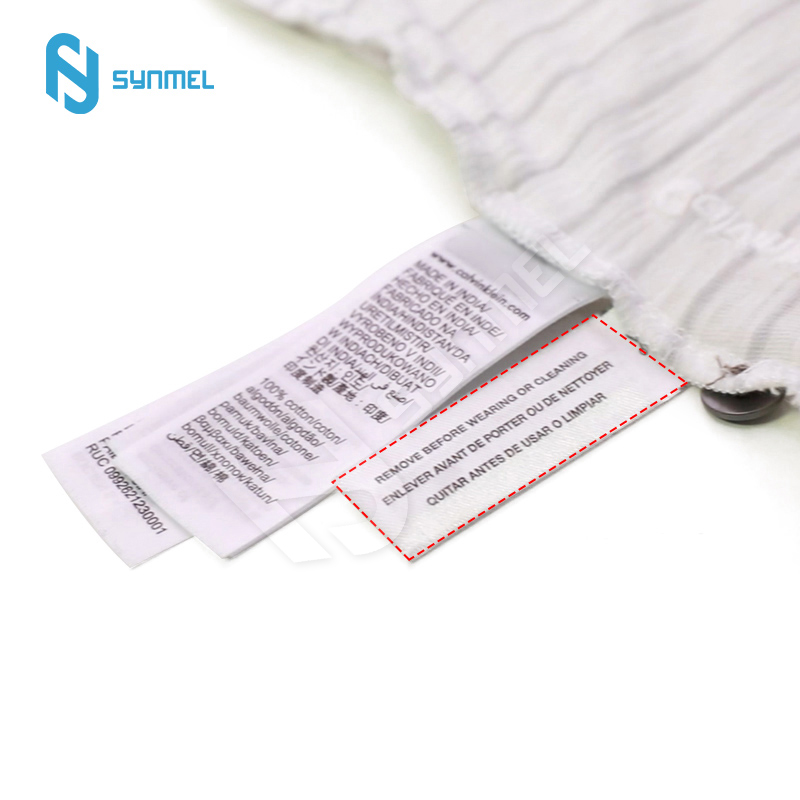
How to choose the right safety AM sewing label?
When choosing the right safety AM sewing label, factors such as safety, suitability, material quality, and compliance need to be considered. Here are some key points to consider when selecting a suitable label:
1. Label Material
Durability and Comfort: Choose non-irritating materials such as soft polyester, nylon, or cotton. These materials are skin-friendly and highly durable.
Breathability and Moisture Absorption: Especially suitable for clothing that comes into direct contact with the skin, ensure the material has good breathability and moisture absorption to reduce allergies and discomfort.
Heat Resistance: Some garments require washing or ironing at high temperatures. Choosing heat-resistant label materials, such as polyester and nylon, ensures the label will not be damaged during washing.
2. Label Design and Printing Technology
Clear Information Delivery: The label should include necessary washing and care instructions and manufacturer information. Ensure the font is clear, washable, and resistant to fading.
Durable Printing Technology: Use methods such as heat transfer printing, laser printing, or screen printing. These methods ensure that the label text and icons remain clearly visible even after prolonged use.
3. Compliance and Certification
Compliance with Industry Standards: Choose labels that meet international standard certifications to ensure that no harmful chemicals are used in the label materials during production, protecting consumer safety.
Safety Standards: Especially in children's clothing or medical fields, labels should meet relevant safety standards to ensure they will not cause harm to skin or health.
4. Label Sewing Method
Durability: Ensure the label is securely sewn, preventing it from easily falling off or cracking. High-strength stitching can be chosen to improve label durability.
Non-irritating Design: Avoid rough or raised label edges, especially for children's clothing and clothing for sensitive skin; choose soft and non-irritating labels.
5. Functional Requirements
Anti-counterfeiting Labels: Some high-end brands or special-purpose clothing may require anti-counterfeiting labels to enhance security and prevent counterfeiting.
Traceability Labels: For certain sectors, labels may need traceability features, such as QR codes or RFID chips.
6. Environmental Friendliness
Environmentally Friendly Materials: Choose labels made from environmentally friendly, recyclable, or biodegradable materials to meet increasingly stringent environmental requirements.
Harmless Chemicals: Avoid using chemicals that may be harmful to the environment and human health, such as volatile organic compounds (VOCs).
7. Label Size and Placement
Appropriate Size: Labels should be customized to the product's dimensions. Oversized labels may affect comfort, while oversized labels may be difficult to read.
Appropriate Sewing Location: The label's placement should consider ease of use, such as being sewn into the side seams, back collar, or waistband of garments, to avoid affecting the wearer's comfort.
8. Cost and Budget
Value for Money: Choose labels suitable based on brand positioning and budget. High-end brands may tend to choose higher-quality, more stylish labels, while mass-produced goods can opt for cost-effective labels.
In summary, when choosing appropriate safety AM sewing labels, the focus should be on ensuring that the label material is safe, durable, comfortable, meets relevant standards, and clearly conveys garment care instructions. Environmental friendliness and compliance are also increasingly important considerations. When sourcing, consider partnering with label suppliers to ensure high-quality labels are customized to meet product requirements.